

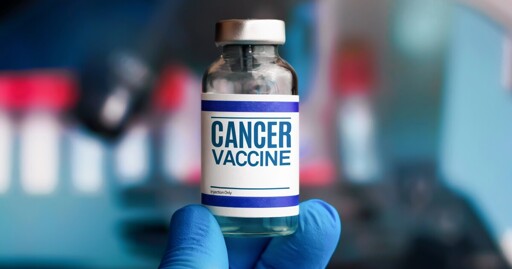
While the formulation isn’t unlike the Covid-19 vaccine, which uses lipid nanoparticles to deliver the genetic instructions to the body, it is still somewhat different. Instead of the drug encoding a virus protein, it sends a message to the immune system to rally the troops. It essentially tells the body to produce certain proteins that stimulate the immune system – including a protein within cancer cells known as PD-L1 (Programmed Death-Ligand 1), which makes tumors become more visible to immune cells.
TLDR: they are finding that it’s more effective to make cancer more visible and have the body’s immune system do its thing.
I’ll read the publication in the coming days and report back, but don’t get your hopes up. There’s a “breakthrough” in cancer research every few months and it leads to nothing. And this study was done in mice which are a bit different to humans (citation needed)
while you’re not wrong i do want to reiterate that mRNA vaccines are likely going to be how we treat and cure cancers so there is precedent at least for this to be massive news. if not this there will likely be a real announcement one day.
The likelihood that all cancers express a common surface marker that is never expressed by any non-cancerous cell seems pretty low. Not a cancer biologist, but there’s all kind of different genetic paths to cancer - why would they all cause some specific molecule to be expressed and why would no other cell ever use it?
Your instincts are correct. The approach in the paper is more complicated than this. Here is the abstract:
Abstract The success of cancer immunotherapies is predicated on the targeting of highly expressed neoepitopes, which preferentially favours malignancies with high mutational burden. Here we show that early responses by type-I interferons mediate the success of immune checkpoint inhibitors as well as epitope spreading in poorly immunogenic tumours and that these interferon responses can be enhanced via systemic administration of lipid particles loaded with RNA coding for tumour-unspecific antigens. In mice, the immune responses of tumours sensitive to checkpoint inhibitors were transferable to resistant tumours and resulted in heightened immunity with antigenic spreading that protected the animals from tumour rechallenge. Our findings show that the resistance of tumours to immunotherapy is dictated by the absence of a damage response, which can be restored by boosting early type-I interferon responses to enable epitope spreading and self-amplifying responses in treatment-refractory tumours.
I think this is overly negative. There have been multiple significant advances in cancer treatment over the past 10 years. It just depends which type you get.
How about fusion power and room temperature superconductors…
ITER is still well under way as far as fusion goes. I doubt room temp super conductors will ever be a thing though. If we can get a metalic material which superconducts above the boiling point of nitrogen then that will be world changing enough.
LOL. ITER is not and has never been meant to be a fusion power plant. That would be DEMO.
Don’t hold your breath.
https://en.wikipedia.org/wiki/DEMOnstration_Power_Plant
Fusion power will never, ever happen. Ever.
Look at CFS SPARC, not ITER
They will have an actual functioning fusion machine with Q>10 by end of this year thanks to high temperature superconductors that were not available when ITER started
So how’s the fusion reactor coming along? The calendar popped a notification for Dec 1 and I had totally forgotten about it. I am now laughing again!
“It’s not a tumor!!!”


